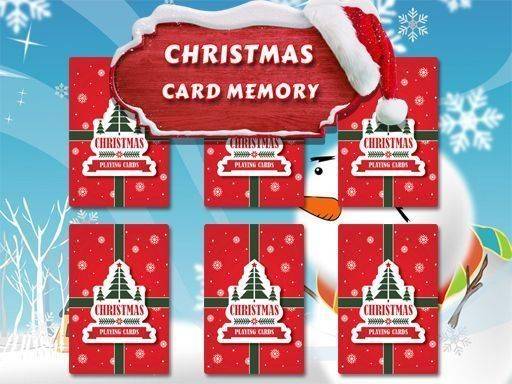
Holiday Tile Recall Puzzle delivers exactly what it promises: a relaxing memory matching experience wrapped in festive visuals. The grid expansion feels natural, and the optional timer adds just enough structure without causing frustration. The tile illustrations are warm and inviting, and the background music creates a pleasant atmosphere. It is an ideal choice for short play sessions or unwinding after a busy day. The lack of aggressive monetization or intrusive ads makes it a trustworthy pick for families.
Players begin with a small grid of face-down tiles. Each tap reveals a cheerful holiday symbol underneath, such as a snowflake, wreath, or bell. The goal is to locate two identical tiles by remembering their positions. A successful match removes the pair from the board, while a mismatch flips both tiles back over, requiring the player to try again on later turns. This straightforward loop forms the foundation of the entire experience.
As players advance, the grid expands to include more tiles, increasing the memory load. Early levels may feature a 4x4 grid with eight pairs, while later stages can double that count. The game introduces a timed element that adds a gentle sense of urgency without becoming overwhelming. Each level is designed to be completable with patience and focus, making the difficulty curve accessible to both children and adults.
The tiles are illustrated with warm, inviting colors and simple, recognizable holiday icons. The background uses soft gradients and subtle animations, such as falling snow or twinkling lights, to create a cozy setting. Background music consists of gentle, seasonal melodies that loop without becoming repetitive. Sound effects for flipping and matching tiles are crisp and satisfying, providing clear audio feedback for each action.
Regular practice helps build a stronger visual memory over time. A useful approach is to focus on one section of the grid at a time, memorizing the tiles in that area before moving to the next. Creating mental associations, like linking a particular icon to a nearby corner or edge, can make positions easier to recall. When the timer is active, taking a few seconds to plan the next move often leads to better accuracy than rushing.



Comments
0 comments