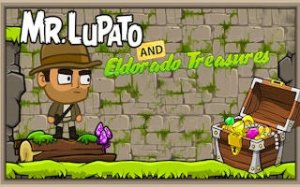
Treasure Trail Logic
Review
Treasure Trail Logic stands out for its clean puzzle design and steady progression. Each world introduces new mechanics that build on previous ones, creating a natural learning curve. The lack of time pressure allows players to think carefully, which is rare in action-oriented games. The colorful graphics and simple controls make it accessible, while the later levels provide genuine challenge for experienced puzzle fans. It is a well-crafted game that respects the player's intelligence and time.
About This Game
Core Puzzle Design
At its heart, Treasure Trail Logic challenges players to think several steps ahead. Each level presents a compact environment where the goal is to reach the exit while gathering all available treasures. The puzzles revolve around spatial reasoning and sequence planning. Players must decide the order of actions, such as which obstacles to clear first or when to trigger certain mechanisms. The game avoids random elements, ensuring that every puzzle has a logical solution that can be deduced through observation and experimentation. This design encourages a methodical approach rather than trial and error.
World Structure and Themes
The game is organized into distinct worlds, each with its own visual theme and set of puzzle mechanics. Early worlds introduce basic concepts like moving blocks and simple traps. Later worlds combine these elements in more complex arrangements, requiring players to juggle multiple objectives simultaneously. The visual style remains bright and clear, helping players focus on the puzzle logic rather than being distracted by cluttered graphics. Each world feels like a new chapter, with a consistent internal logic that builds on previous lessons.
Obstacle and Trap Mechanics
Obstacles in Treasure Trail Logic come in several forms. Some are stationary blocks that can be destroyed to open paths. Others are barrels or similar objects that may roll or shift when interacted with. Traps add a timing dimension, as they activate on a cycle or in response to player movement. Successfully navigating these hazards requires patience and pattern recognition. The game rewards players who take time to observe trap patterns before moving. There is no penalty for restarting a level, which encourages experimentation and learning from mistakes.
Progression and Difficulty Curve
The difficulty increases steadily throughout the game. Early levels serve as tutorials, gently introducing each new mechanic in isolation. Mid-game levels start combining mechanics, requiring players to apply multiple skills simultaneously. Late-game puzzles demand precise timing and careful route planning. The progression feels natural because each new challenge is built on concepts already mastered. Players who complete earlier worlds will have the tools needed to tackle later ones, though they may need to revisit strategies from previous levels to find solutions.
Visual and Audio Atmosphere
The game uses a colorful, cartoon-like art style that makes each world feel inviting. Characters and objects are clearly defined, which helps players quickly identify interactive elements. The background music is light and unobtrusive, designed to keep players focused without becoming repetitive. Sound effects provide feedback for key actions like collecting treasures or solving a puzzle. The overall presentation is polished but not distracting, allowing the puzzle-solving to remain the central focus of the experience.





Comments
0 comments