Tile Mosaic Logic Challenge
Review
Tile Mosaic Logic Challenge offers a straightforward yet deeply engaging puzzle experience. The core sliding mechanic is easy to learn, but the gradual increase in grid size and pattern intricacy keeps the mind sharp. Its browser-based nature and mobile-friendly design make it accessible anywhere. The absence of timers or pressure allows for thoughtful play, and the colorful interface remains clear even on small screens. For anyone seeking a no-fuss brain teaser that grows with you, this is a solid choice.
About This Game
Pattern Replication Mechanics
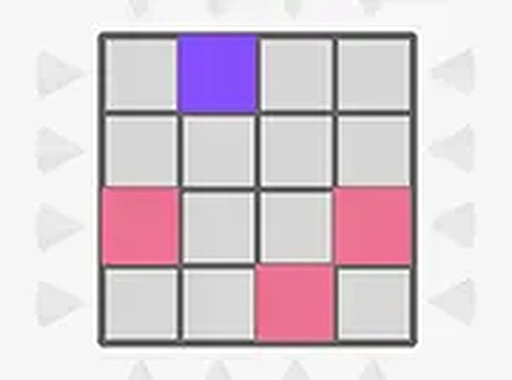
At its core, this game presents a grid of multicolored squares arranged in a random order. The objective is to shift these tiles one at a time into an empty adjacent cell until the entire grid matches a displayed target pattern. Success depends on visualizing the sequence of moves needed, as each slide either brings you closer to the goal or creates additional obstacles. This mechanic rewards players who think several steps ahead and adapt their strategy as the puzzle evolves.
Difficulty Progression
Early puzzles use smaller grids and simpler color arrangements, allowing newcomers to grasp the basic sliding logic. As players complete these introductory challenges, the game introduces larger grids and more intricate patterns that demand greater concentration. The increasing complexity ensures that the experience remains engaging for both casual players and those seeking a deeper cognitive challenge. Each new puzzle feels like a fresh test of planning and patience.
Visual Design and Accessibility
The interface uses bright, distinct colors for each tile, making it easy to differentiate between squares even on small screens. The target pattern is displayed prominently alongside the working grid, so players can reference it without strain. Controls are intuitive: a simple click or tap moves a tile into the empty space. The game runs smoothly in any modern web browser and adapts to mobile devices, allowing play during short breaks or longer sessions without any installation.
Strategic Thinking Development
Regular play encourages the development of spatial reasoning and sequential planning skills. Players learn to recognize patterns and anticipate the consequences of each move. The game does not rely on speed or reflexes; instead, it rewards careful observation and methodical thinking. This makes it an excellent tool for mental exercise, as each completed puzzle provides a sense of accomplishment and motivates further practice.






Comments
0 comments