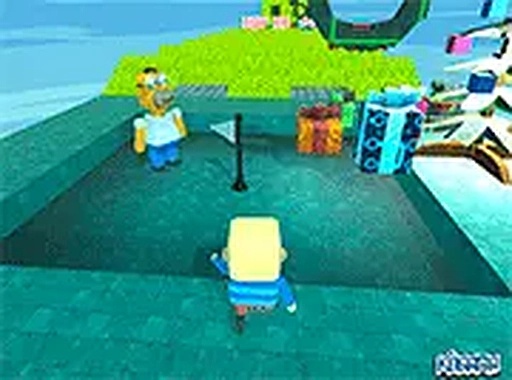
This game delivers exactly what its premise promises: a series of colorful obstacle courses that test your ability to time jumps and maintain momentum. The controls are responsive, and the level design gradually introduces more complex patterns without becoming frustrating. The timer adds a light competitive edge, especially when comparing with friends. The bright, uncluttered visuals keep the focus on the action. It is a well-executed arcade experience that respects the player's time and skill.
This arcade-style platformer centers on navigating a series of colorful courses filled with moving platforms and gaps. The primary action involves running and leaping from one surface to another while avoiding pitfalls. Each course is designed as a short, self-contained challenge, making it ideal for quick play sessions. The emphasis is on timing and coordination rather than combat or narrative, offering a pure test of player reflexes.
The courses are arranged in a progressive sequence, starting with simple layouts that teach basic movement. Later stages introduce more complex arrangements, such as rotating blocks and narrow ledges that require careful momentum management. The visual style remains bright and cheerful throughout, with each course featuring distinct color schemes and blocky structures. This gradual increase in complexity provides a clear sense of advancement as players improve their skills.
Players control their character using standard keyboard inputs. Movement keys allow for left, right, forward, and backward motion, while a separate key handles jumps. The controls are responsive, enabling quick adjustments during mid-air navigation. There are no additional mechanics like attacking or inventory management, so the focus stays entirely on movement precision. This simplicity makes the game accessible to newcomers while still offering depth for experienced players.
A built-in timer tracks how long each course takes to complete. Players can compare their best times with friends, which adds a friendly competitive layer. This encourages repeated attempts to shave off seconds and refine routes. The lack of random elements means that improvement comes purely from practice and better understanding of course layouts. This structure supports long-term engagement without requiring complex progression systems.
The game uses a blocky, low-poly art style reminiscent of digital building toys. Bright primary colors and simple shapes create a welcoming environment that appeals to all ages. The courses are set against clear skies, and the overall tone is upbeat and non-threatening. This aesthetic choice keeps the focus on the gameplay rather than on any narrative or thematic elements, reinforcing the game's identity as a straightforward arcade experience.






Comments
0 comments